 Como Travel Guide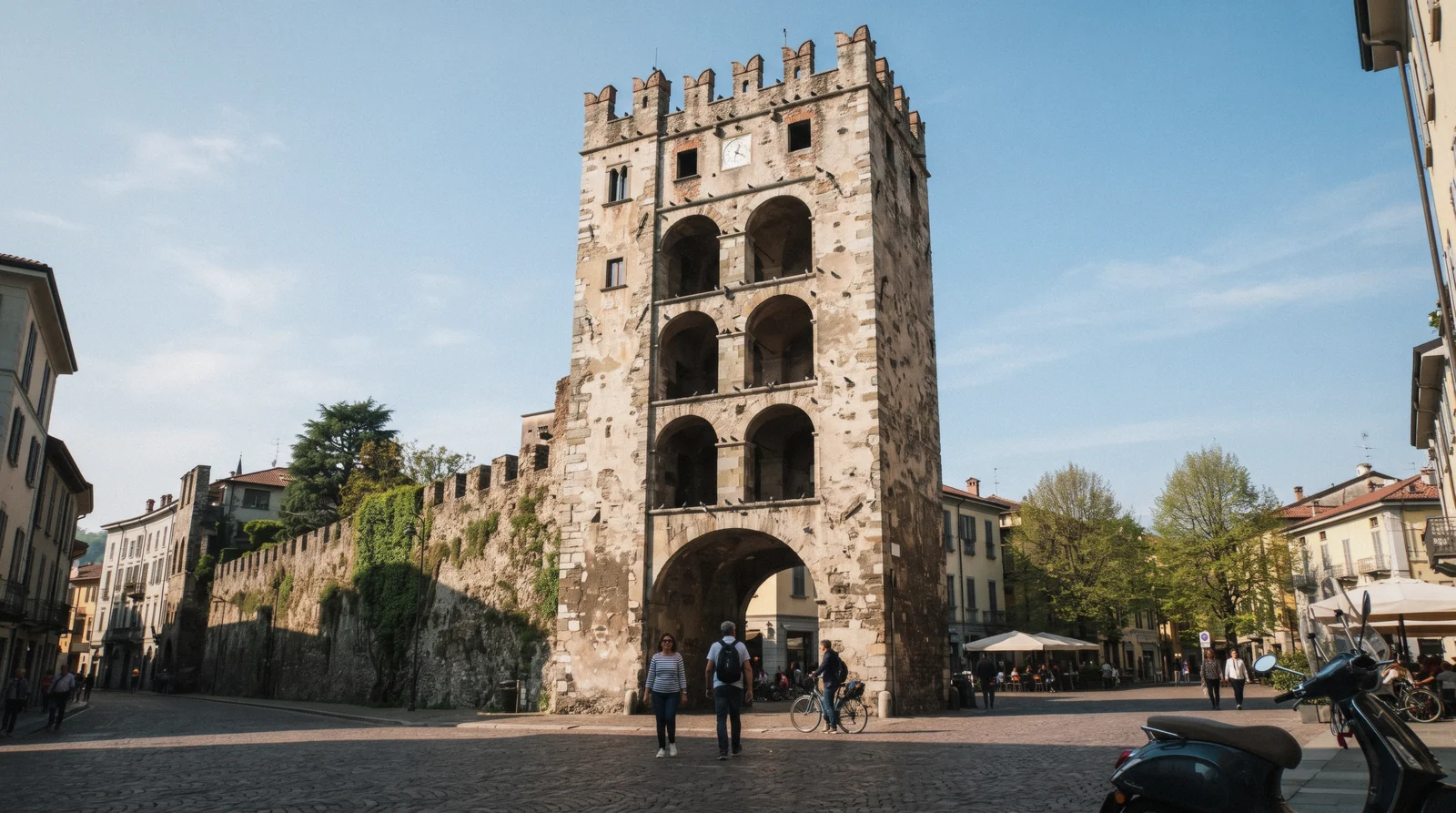
Porta Torre Como and the Medieval City Walls
In Porta Torre Como keeps the great south gate of its medieval walls, in italia.it's words the most visible part of the defences that once surrounded the whole city. It stands about 40 metres high at the centre of the south side of the circuit, facing the road to Milan, the city that had pulled the Roman walls down. From outside it is a sheer wall of stone with almost no openings. From inside the city it opens into four orders of arches, the ghost of four wooden floors that no longer exist. The tower is the gate of the only side of the walls that still survives complete, between the pentagonal Torre Gattoni and Torre San Vitale. You cannot enter it, there is no ticket and no hour, and that is exactly what this page explains: what to look at, where to stand, and how the rest of the circuit fits together. For the streets and squares inside, see the Como old town guide. The rest of the city, from the lake to the hills, starts on the Como guide's start page.
Quick answer The essentials on Porta Torre Como
Porta Torre is the great south gate of Como's medieval walls, completed by 1192 during the rebuilding ordered by Frederick Barbarossa, and it stands about 40 metres high. It cannot be visited inside because its wooden floors are destroyed, so you see it free from the street at any time.
Key takeaways
- The south wall walk from Torre Gattoni to Torre San Vitale is the only complete side of the circuit left
- the Como guided city tour walks the historic centre and sees the walls from the outside with a guide
- The whole circuit, its gates and towers are set in context in the Como old town guide
- Pair the walls with Como Cathedral, a short walk inside the gate into the old town
Key facts
Opening hours
| Daily, outside view | 00:00–24:00 |
|---|
Closed Interior not open to visitors
Planning it
- Time needed
- Not stated officially. Our estimate: 45 minutes for the south wall
- Book ahead
- Optional — walk-up usually fine
- Address
- Piazza Vittoria, 22100 Como
Porta Torre itself costs nothing and needs no booking, because there is no interior to enter. The table sets the free walk beside the three bookable tours that pass the walls, at the prices the operators list.
Do you want the walls explained, or just to see them?
| Option | Price | Includes | Cancel | Book |
|---|---|---|---|---|
| Walk the walls on your ownAnyone happy to read the towers with this page in hand | Free | Outside views of Porta Torre and the towers, no interior | Nothing to cancel | Official site |
| Como guided city tourFirst-time visitors who want the old town explained, walls included | $43.56 | Two hours on foot through the historic centre with an English-speaking guide, exterior visit to the cathedral and the Social Theatre, monument entrances not included | Free cancellation up to 24 hours in advance | Check Availability |
| Private walking tourSmall groups who want their own pace and their own guide | $72.65 | A private guide for your group in English, Italian or Spanish, the 3-hour option adds Villa Olmo and its gardens. The villa building is closed, so it is seen from outside | Free cancellation up to 24 hours in advance | Check Availability |
| Golf cart city tourAnyone who wants the sights without the walking | $46.33 | Two hours in an open electric cart through Como and out to Cernobbio with a driver and a seven-language audio guide, every stop is a photo stop | Free cancellation up to 24 hours in advance | Check Availability |
The only money involved is for guided walks that cover the walls or the old town around them, and more options sit in the Como tours selection. Tour prices are as listed by the operators and can change. The wall walk itself has no fee. Figures current for in Q3 2026.
Walks That Pass the Walls
None of these tours enters Porta Torre, because nobody can. They are here because they put the walls in context, either with a live guide through the streets the walls enclose or at speed from a cart. Each links to its full card with price, meeting point and cancellation terms.
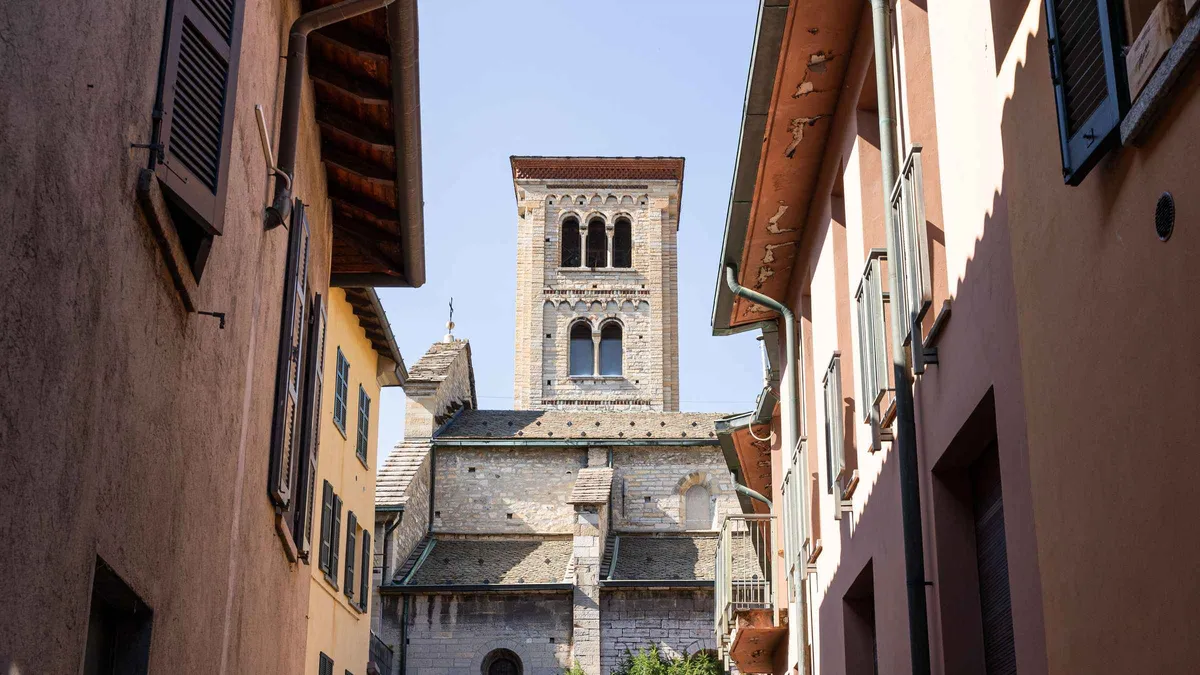 from $43.56
Como: Guided City Tour
A two-hour guided walk through Como's historic centre, taking in the Cathedral, the Social Theatre and the medieval walls from the outside. Entrance tickets to any monument are not included.
Check Availability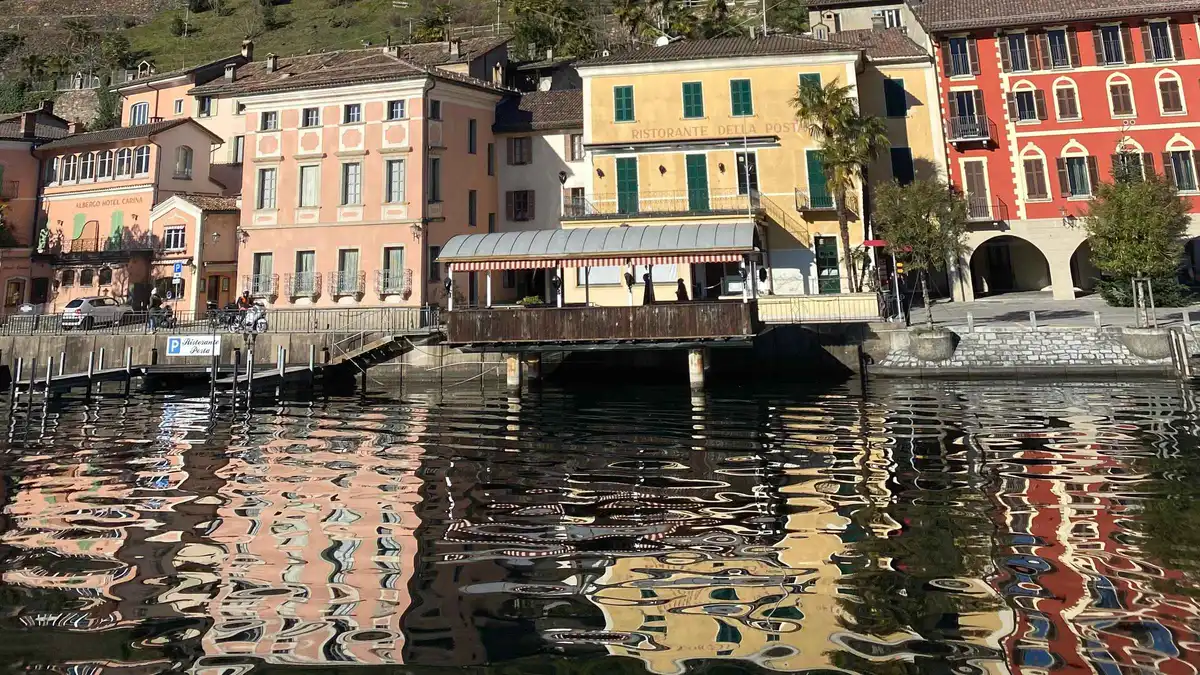 from $72.65
Como: Private Walking Tour with Villa Olmo Visit
A private walking tour of Como's old town, with the 3-hour option adding Villa Olmo and its gardens. Villa Olmo's interior is not always open, per the listing.
Check Availability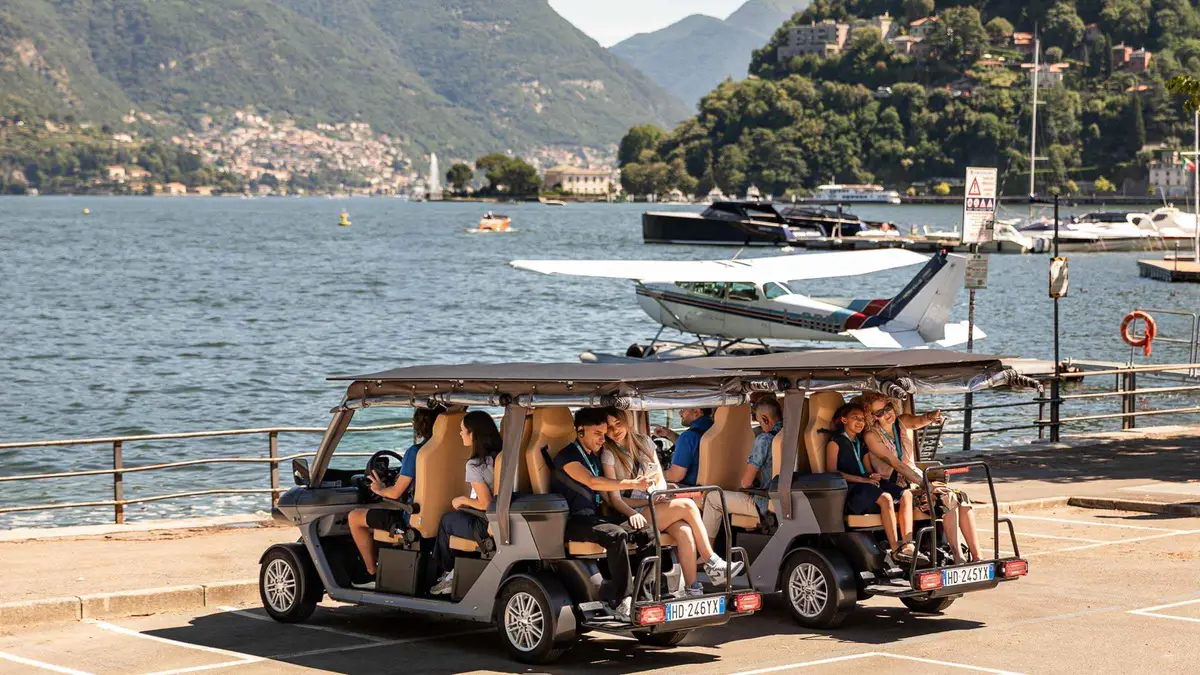 from $46.33
The Iconic Como City Tour • 2-Hour Golf Cart Experience
A two-hour tour of Como and Cernobbio in an open electric golf cart with a driver and a seven-language audio guide, stopping for photos at Villa d'Este and Villa Erba.
Check AvailabilityPrices, ratings and details are the platform's own. dollar figures are the listed prices — the platform bills in your account's currency.
Reading Porta Torre's Two Faces
Porta Torre is built to be read from both sides, and the two sides say opposite things. The regional heritage catalogue describes it precisely, and once you know what to look for the tower stops being just a big lump of stone.
The Milan Side: A Wall With No Answer
Stand in Piazza Vittoria, on the traffic side outside the walls, and you see the face the builders turned toward Milan. The outer facade is massive and almost blind, an impenetrable screen of masonry with no decoration and no weakness to exploit. italia.it calls it an impenetrable facade, and that is the whole point. The tower faces Milan, the city that pulled down Como's Roman walls at the end of the Ten Years' War.
Because Piazza Vittoria is a working traffic junction, do not linger at the kerb. The better photograph and the better look come from the city side, through the big arch.
The City Side: Four Orders of Arches
Walk through the gate and turn around. The inner face is lightened by four orders of paired arches, one above the other, matching the four internal floors of the tower. Those floors were wooden and they are destroyed, so what you see now is the masonry skeleton, eight arches set off-axis to the much larger ground-floor arch below them.
The ring of squared blocks around that big ground arch alternates white and black stone. Como Cathedral and the Broletto stand inside the walls to the north.
The Bell Window
High on the inner face there is a round-arched window. italia.it records that it once let people see the bell used to warn citizens of danger. It is worth finding in your photograph, because it explains what the tower was for beyond defence. Porta Torre was also the city's alarm.
What Is Missing
The four wooden floors are gone, and with them any possibility of walking up. The catalogue of Lombardia Beni Culturali lists the current use simply as a monument, owned by a public body. So the tower you photograph is the load-bearing frame of a building whose insides have been emptied by time.
That is also why no operator sells entry, and why every price table for Porta Torre starts and ends at zero.
Sources: Lombardia Beni Culturali, italia.it
The Walls in Ten Dates
Como's walls are a story of destruction and rebuilding, and the dates explain why the circuit you walk today follows the Roman line on a slightly wider perimeter. Each step below comes from the regional heritage catalogue's record of the Mura medioevali.
-
1127
The Roman walls are pulled down
At the end of the Ten Years' War against Milan, running 1118 to 1127, the Milanese demolished Como's Roman walls.
-
1154
Barbarossa's consent
With Frederick Barbarossa's first descent against Milan, Como allied with the emperor and obtained his consent to rebuild the defences.
-
1158
Work begins on the Mura Federiciane
Barbarossa starts restoring and strengthening the fortifications on the Roman line, slightly wider. The big south towers, including Porta Torre, belong to this phase.
-
1162
Milan is sacked
Barbarossa and his Como allies destroy Milan, the enemy the new walls and the blind face of Porta Torre were built against.
-
1192
Porta Torre is complete
By 1192 the building of the great Porta Torre had been completed, the date given by both italia.it and the catalogue's complex record.
-
1284-1285
The circuit reaches the lake
The Castello della Torre Rotonda is built across the east side and Porta San Vitale is opened. In the same period the circuit is extended to the lake.
-
14th century
Pentagonal flanking towers
Porta Torre is flanked by two much smaller pentagonal towers that repeat its motif of arches open toward the city.
-
16th century
A semicircular bastion
The walls are consolidated with a semicircular bastion, whose remains show near the pedestrian underpass.
-
1783
The walls are sold
The military treasury sells the walls to the Comune, which sells them to private owners. The moat is filled and replaced by a tree-lined avenue on a project by marchese Rovelli, leaving the walls a customs role.
-
1970s
Pedestrianisation
The decision to pedestrianise the historic centre protects what is left of the walls and makes the centre a place you walk. The walls still enclose the centre on three sides.
Sources: Lombardia Beni Culturali, Mura medioevali record, and italia.it.
Walking the South Wall: Torre Gattoni to San Vitale
The south side of the circuit is, in the words of the regional catalogue, the only one still complete. It is the walk this page exists for, and it strings together three towers and the sloped base of the wall itself.
The Only Complete Side
Everywhere else the circuit is broken, buried or half-demolished. On the south side the wall still runs unbroken from corner tower to corner tower, and it still shows its scarpa, the sloped masonry base that, at regular intervals, strengthened the foot of the wall. Start at the south-west corner and walk the line.
Torre Gattoni and Volta's Laboratory
The Torre Nuova at the south-west corner is pentagonal, like the two small towers that once flanked Porta Torre. It is better known as Torre Gattoni, after Giulio Cesare Gattoni, a canon and its 19th-century owner who had a physics laboratory there. Alessandro Volta studied the electric pile in that laboratory.
A defensive tower that ended up hosting the experiments of Italy's most famous physicist is a good place to start thinking about how these walls were reused once their military job was done.
Porta Torre in the Middle
Halfway along the side, Porta Torre opens the wall with its great arch. This is the position to photograph it from, with the scarpa below and the complete curtain wall running away on both sides. Remember to go through to the city side for the four orders of arches.
Torre San Vitale and the Museum
At the opposite corner stands Torre di San Vitale, about 36 metres high by the catalogue's circa figure, next to the Museo archeologico Paolo Giovio. A note for planning: the museum's exhibition halls are currently closed to the public for maintenance work and the Comune page gives no reopening date, so treat the tower as an exterior sight. Local news reported a new lighting installation on the wall stretch between Torre Gattoni and Torre San Vitale, so this side is worth a second look after dark.
Sources: Lombardia Beni Culturali, Espansione TV news, Comune di Como
What Survives of the Rest of the Circuit
The south side is the exception. The other three sides of the circuit survive unevenly, and knowing what is missing saves you from hunting for towers that are not there.
The West Side: Gates and Traces
On the west side stood Porta Sala, at today's junction of Via Garibaldi and Piazza Cacciatori delle Alpi, and then the gates of Santa Margherita and dell'Annunciata. Of those two only traces of the defensive forebuildings remain. You are reading street archaeology here, not standing monuments, so set expectations accordingly.
The East Side: Partial Survival
The east side survives only in part, with remains of late-communal fortifications and of the Castello della Torre Rotonda, the castle built across the side in 1284-1285 and demolished in the 19th century. This is the side the lake extension once ran from.
Castel Baradello
Castel Baradello belongs to the same listed complex as the walls, but it stands on the hill outside the centre, not on the circuit. Plan it as its own outing rather than part of a wall walk.
The Roman Line and the Porta Pretoria
The medieval walls follow the Roman line on a slightly wider perimeter, so the older city is underneath you as you walk. The Roman Porta Pretoria, two arches flanked by two towers of the colony founded under Caesar, survives in a semi-basement archaeological site and was reopened after restoration according to local reporting. No official opening hours for visiting it are published, so check on site or ask at the Broletto infopoint before building it into your route.
Sources: Lombardia Beni Culturali, QuiComo
Can You Go Inside Porta Torre?
No. The tower is not visitable inside, and no Comune page publishes opening hours or a ticket for it, because there is nothing to open. The reason is structural: the four internal floors were wooden and they are destroyed, so there is no staircase, no landings and nothing to walk on. The catalogue lists its current use simply as a monument. Museionline carries the same verdict, a tower not visitable inside.
If you want to climb something, the hill will not help: the Faro Voltiano lighthouse above Brunate has been closed since 2024 with no reopening date, and it is only seen from outside. In the centre, the $6.92 (€6) ticket at Como Cathedral opens the transept and the choir, and the upper walkways are only open with a signed form and a licensed guide.
1192 or the 14th Century? The Dating Question
If you read the regional heritage catalogue closely you will find two different dates for Porta Torre in two of its own records. The short record for the tower prints a 14th-century construction date. The fuller complex record of the walls, the one that walks through the whole building sequence, states that the great Porta Torre was completed by 1192, in the phase of the Barbarossa rebuilding. italia.it uses the same 12th-century completion and even puts it in a sentence, withstanding the passage of time since 1192.
So the catalogue itself is inconsistent, and the balance of the fuller record and the national portal points clearly to the 12th century. We print 1192 as the completion date throughout this page and do not use the 14th century for Porta Torre itself. The 14th century does belong to the walls' story, but for a different feature: it is when the two much smaller pentagonal towers were added to flank the gate. If you see a 14th-century date attached to Porta Torre somewhere in print, that is the short record's figure, not the considered one.
Porta Torre: Do and Don't
A free outdoor monument needs no booking, but a few habits make the visit better.
Do
- Look at the tower from both sides, the blind facade outside and the four orders of arches inside
- Walk the complete south wall from Torre Gattoni to Torre San Vitale and note the scarpa at the base of the wall
- Come back after dark, when the lit stretch between Torre Gattoni and San Vitale is worth a second look
- Pair the walls with the old town inside the gate, the cathedral nave is free on a set route
- Go through the arch to the city side before you take the photograph
Don't
- Do not look for an entrance, ticket office or opening time, the tower is not visitable inside
- Do not linger in the traffic of Piazza Vittoria, the outer facade is best admired quickly from the pavement
- Do not plan to visit the Museo archeologico Paolo Giovio by San Vitale, its halls are closed for maintenance with no reopening date
- Do not drive to the gate, the whole walled city is a camera-enforced limited traffic zone all year
- Do not go hunting for complete towers on the west and east sides, only the south side survives complete
Map of Como's Walls and Towers
The pins mark the three towers of the south walk and the two old-town churches most often paired with it. Coordinates come from Wikidata and OpenStreetMap.
Coordinates from Wikidata and OpenStreetMap.
Next Stops From Porta Torre
The gate opens straight into the historic centre, so the natural next stops are all inside the walls.
Como Old Town
The Como old town guide covers the squares and streets inside the walls, from Piazza Duomo to the lake edge, and what is free.
Basilica di San Fedele
The Basilica di San Fedele sits a few streets inside the gate on its own square. Its visiting hours vary from source to source, so the San Fedele page sets out what is published.
Museo della Seta
The Silk Museum lies outside the walls on Via Castelnuovo and explains the industry that made Como rich long after the walls lost their job. It opens Tuesday 14:00-18:00 and Wednesday to Sunday 10:00-13:00 and 14:00-18:00, closed Mondays.
Porta Torre Questions
How tall is Porta Torre?
About 40 metres, the figure given with a circa by Lombardia Beni Culturali and stated plainly by italia.it. Its neighbour on the south wall, Torre San Vitale, is about 36 metres. See walking the south wall.
When was Porta Torre built?
It was completed by 1192, during the rebuilding of the walls begun under Frederick Barbarossa. A short record in the regional catalogue prints a 14th-century date, but the fuller record and italia.it both give the 12th-century completion, and that is what we print. The full reasoning is in the dating question.
Can you climb Porta Torre?
No. The tower is not visitable inside, its four wooden floors are destroyed and no hours or tickets exist. The Faro Voltiano above Brunate is closed too, so the climb in town is the upper walkways of Como Cathedral, with a signed form and a licensed guide.
Where are Como's medieval walls?
They enclose the historic centre on three sides, and the only complete side is the south one, where Porta Torre stands between Torre Gattoni and Torre San Vitale. The gate's address is Piazza Vittoria, 22100 Como. The Como old town guide covers what lies inside.
Is Porta Torre free?
Yes, completely. It is seen from the street at any time, there is no interior to enter and no ticket exists. If you want the walls explained by a person instead, the Como guided city tour covers the historic centre with the walls seen from outside.
What is Torre Gattoni?
It is the pentagonal corner tower at the south-west end of the wall walk, also called the Torre Nuova. It takes its second name from Giulio Cesare Gattoni, the canon who owned it in the 19th century and kept a physics laboratory there where Alessandro Volta studied the pile. It is the first stop of the south wall walk.
Where Porta Torre Fits in a Day
Porta Torre works either as the first stop or the last of an old-town loop, because the gate is the front door of the walled city. Start here, come through the arch and walk inward to Como Cathedral and the Broletto, and you read the city the way it was meant to be read, from the wall to the heart. Or walk the centre first and finish at the gate in the evening, when the stretch between Torre Gattoni and San Vitale is lit.
Our one day in Como itinerary places the walls in exactly this way, and the Como old town guide covers the streets and squares inside. Since the whole walled city is a limited traffic zone enforced by cameras all year, arrive on foot, by bus or by train and keep the walk car-free.
Porta Torre and the Walls on Film
Three short films that show the gate, the lit walls and the walk into the old town before you go.
Porta Torre - Como
A short look at Porta Torre and the square around it.
Video: tvholidayitWalking in LAKE COMO ITALY 4K Porta Torre to Piazza San Fedele
A walk from the gate through the old town to Piazza San Fedele.
Video: Walking in the CityCOMO: il Magic Light Festival arriva in piazza Verdi e a Porta Torre
Local news on a light festival at Porta Torre, useful for seeing the tower after dark.
Video: Espansione TvVideos load from YouTube only when you press play.
Prices, hours and terms are set by the venue or operator and confirmed at checkout.
We may earn a commission if you book through one of our links, at no extra cost to you. Full affiliate disclosure